Scholarly Events
UConn Law is proud to host scholarly events throughout the year that foster academic excellence and professional growth. Join us to engage with leading scholars and practitioners and advance your understanding of pressing legal issues. To see our upcoming events, visit our events page.
In Conversation
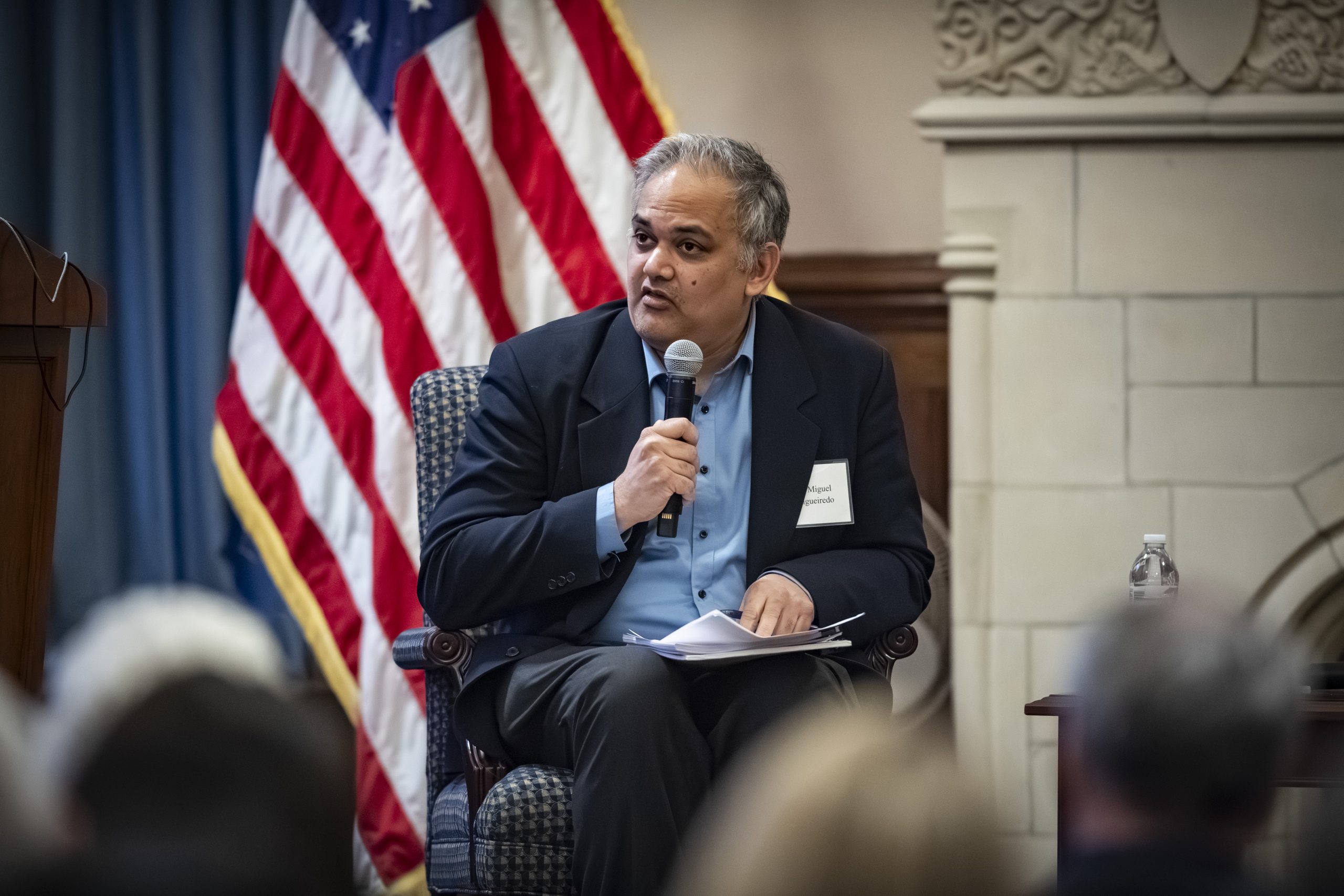
Scholars and experts share their analyses of recent U.S. Supreme Court opinions, executive orders, government decisions, and other important developments in the law.
Insurance Law Workshop
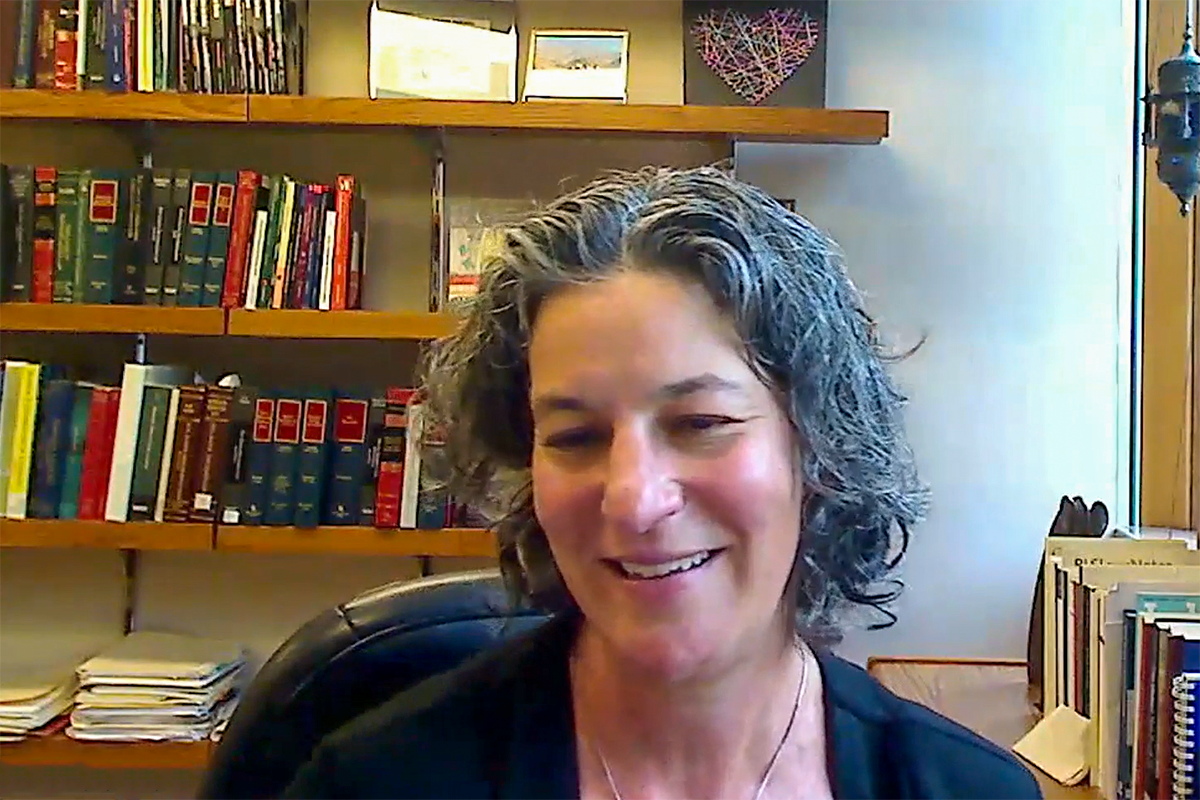
Since 2021, the Insurance Law Center at the UConn School of Law has hosted a series of talks covering new ideas in insurance law and risk regulation.
Journal Symposia
Each of the schools’ student-led journals puts together an annual symposium, bringing experts to campus to discuss their relevant research intersecting with other timely issues.
Recent Events
Hon. Gustavo Gelpí on Public Service and Civility
Judge Gustavo Gelpí of the U.S. Court of Appeals for the First Circuit spoke at the University of Connecticut School of Law on February 7, 2024, as the 2024 Day Pitney Visiting Scholar.
Never Far From Home: A Book Talk
UConn School of Law and the UConn Law Alumni of Color Affinity Group held a fireside chat on February 1, 2024, with Microsoft executive and attorney Bruce Jackson to discuss his book, "Never Far From Home: My Journey from Brooklyn to Hip Hop, Microsoft, and the Law."
Evidence Through a Critical Lens
The Connecticut Public Interest Law Journal's symposium on January 26, 2024, explored how the law of evidence intersects with systems of inequality based on gender, racial, and other marginalized group-based status.
WATCH THE VIDEOS
Recent Events
The Perry A. Zirkel Law and Education Conference
Religion, Parents, and Public Education at the Crossroads The role of religion in U.S. public education has long sparked debate, from school prayer to curriculum content. This conference examined a pivotal new development: the Supreme Court’s decision in Mahmoud v. Taylor, which affirms parents’ right to opt their children out of instruction that conflicts with […]
[Read More]Connecticut Journal of International Law Roundtable Talk
Cyber Chaos On March 24, UConn Law hosted “Cyber Chaos at the Border: Navigating Competing and Conflicting International Cybercrime Laws,” a two-hour roundtable examining the legal and geopolitical stakes at the intersection of cybercrime and international law. The program opened with a keynote lecture by Matthew Lowe, Visiting Professor from Practice and an expert in […]
[Read More]Earth Day Conference
The Path Forward: Regional Strategies for Climate Resilience From rising seas to stronger storms, from grid reliability to frequent flooding, municipalities and states face common climate challenges that are daunting individually but can be addressed cooperatively by leveraging collective effort. Regional resilience can be a path forward. UConn Law’s Center for Energy & Environmental Law […]
[Read More]Connecticut Supreme Court ‘On Circuit’
The Connecticut Supreme Court’s On Circuit program brings the court to the UConn School of Law and other university, college, and law school audiences, providing an opportunity to observe oral arguments in actual court cases. On November 30, 2024, the court heard these cases:
Kayla Suprynowicz, et al. v. Narendra B. Tohan
The plaintiff brought an action against the defendant doctor, alleging, among other things, that the doctor used his own sperm in providing fertility services to her parents. At issue is whether the trial court properly struck plaintiffs’ claims as sounding in wrongful life; whether the trial court properly struck plaintiffs’ claims for not alleging “extraordinary damages”; and whether Connecticut law should recognize wrongful life claims. Briefs
State of Connecticut v. Richard G. Dabate
The second case received national attention as the “Fitbit Murder.” At issue is whether the prosecutor’s alleged failure to make required disclosures, objectionable cross-examination questions, and inflammatory closing argument warrant reversal of conviction; whether a police interview of the defendant at a hospital amounted to custodial interrogation; and whether evidence of the victim’s movements recorded by Fitbit was sufficiently reliable and accurate to be admitted. Briefs.