Scholarly Events
UConn Law is proud to host scholarly events throughout the year that foster academic excellence and professional growth. Join us to engage with leading scholars and practitioners and advance your understanding of pressing legal issues. To see our upcoming events, visit our events page.
In Conversation
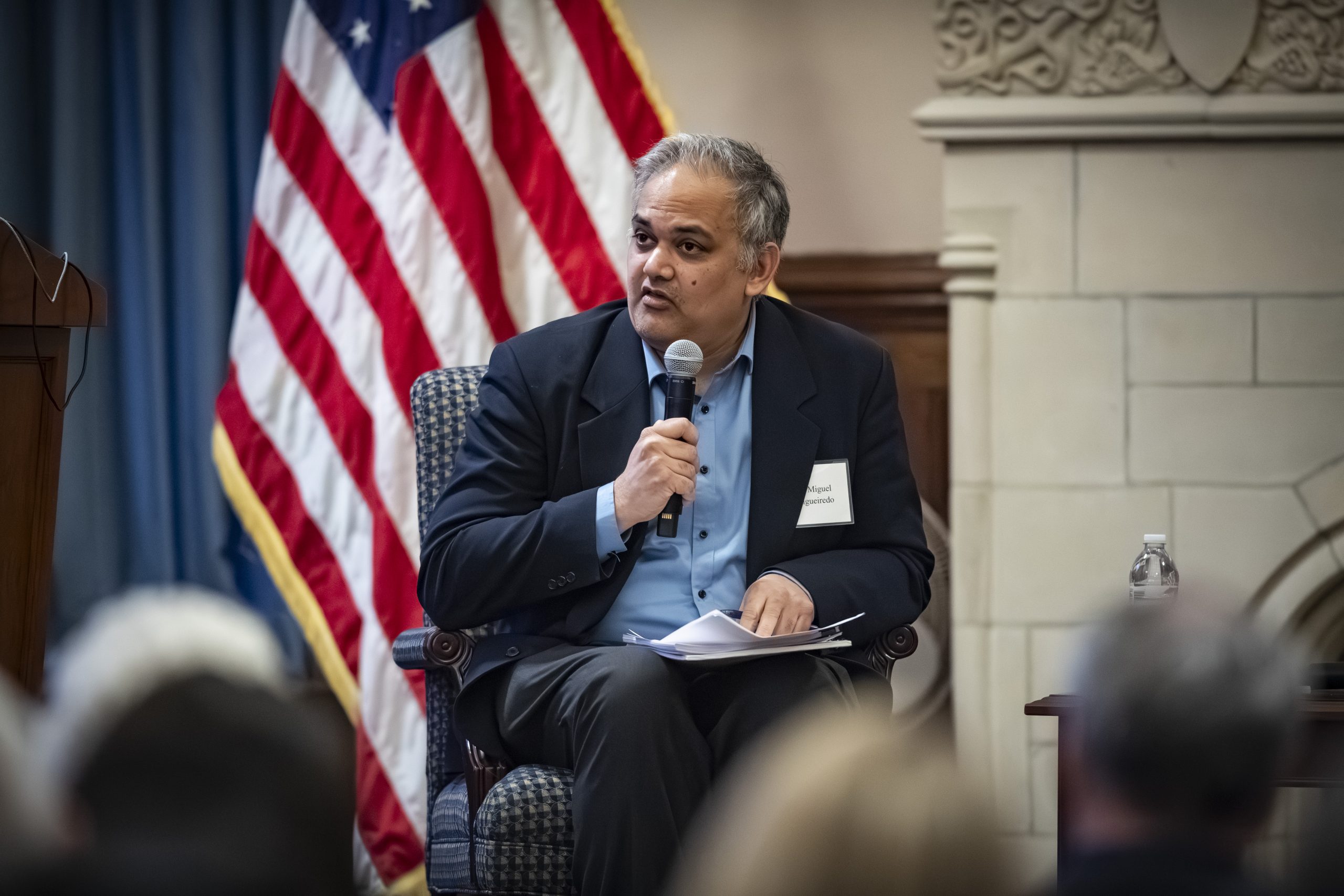
Scholars and experts share their analyses of recent U.S. Supreme Court opinions, executive orders, government decisions, and other important developments in the law.
Insurance Law Workshop
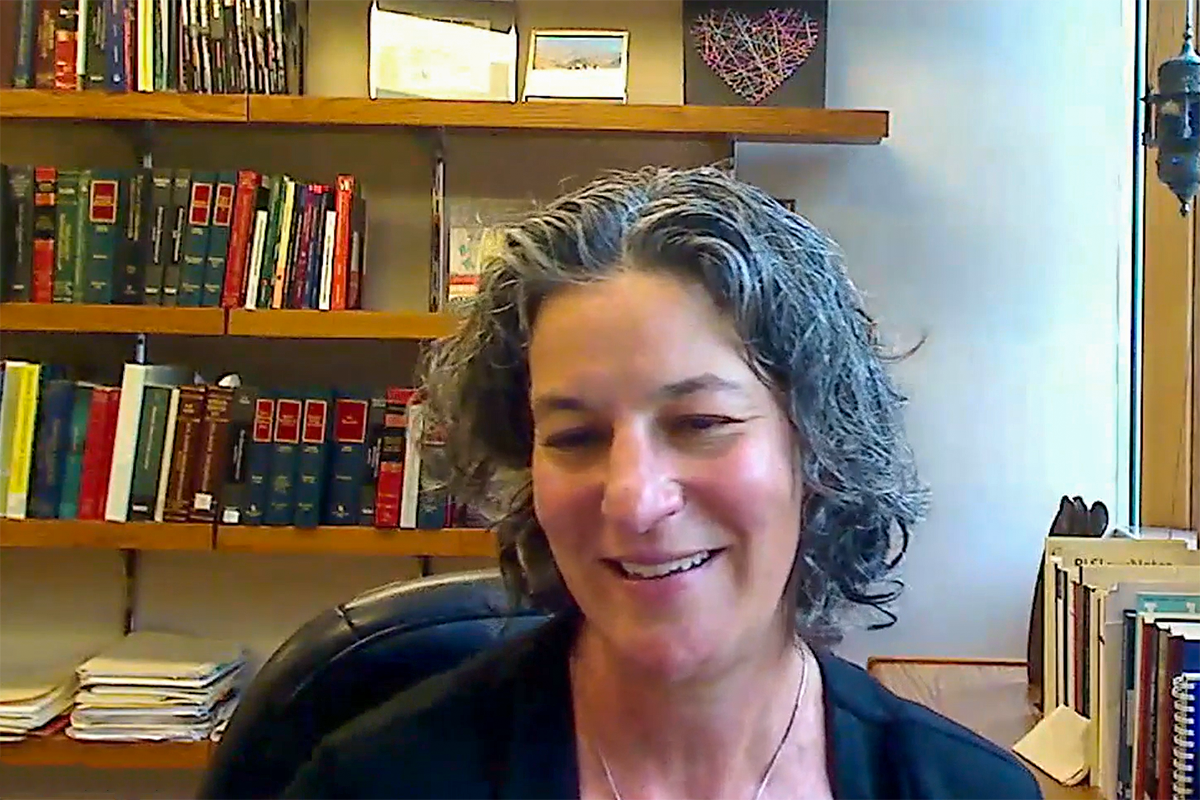
Since 2021, the Insurance Law Center at the UConn School of Law has hosted a series of talks covering new ideas in insurance law and risk regulation.
Journal Symposia
Each of the schools’ student-led journals puts together an annual symposium, bringing experts to campus to discuss their relevant research intersecting with other timely issues.
Recent Events
Hon. Gustavo Gelpí on Public Service and Civility
Judge Gustavo Gelpí of the U.S. Court of Appeals for the First Circuit spoke at the University of Connecticut School of Law on February 7, 2024, as the 2024 Day Pitney Visiting Scholar.
Never Far From Home: A Book Talk
UConn School of Law and the UConn Law Alumni of Color Affinity Group held a fireside chat on February 1, 2024, with Microsoft executive and attorney Bruce Jackson to discuss his book, "Never Far From Home: My Journey from Brooklyn to Hip Hop, Microsoft, and the Law."
Evidence Through a Critical Lens
The Connecticut Public Interest Law Journal's symposium on January 26, 2024, explored how the law of evidence intersects with systems of inequality based on gender, racial, and other marginalized group-based status.
WATCH THE VIDEOS
Recent Events
What Are Humans For in Corporations?
Minor Myers delivered “What Are Humans For in Corporations?” to celebrate his investiture as the Zephaniah Swift Professor of Law. A nationally recognized scholar of corporate law, mergers and acquisitions, and corporate finance, Myers examined a fundamental question about the modern corporation: What role should human judgment play as more decision-making can be delegated to […]
[Read More]Derrick Bell’s Racial Realism: Thirty-five Years Later
On September 20, 1991, Derrick Bell delivered “Racial Realism” at UConn Law, challenging those working to advance racial justice to consider new civil rights strategies rooted in a realist understanding of the permanence of racism in the United States. The Connecticut Law Review published Bell’s speech the following spring, along with responses from other scholars. […]
[Read More]The Perry A. Zirkel Law and Education Conference
Religion, Parents, and Public Education at the Crossroads The role of religion in U.S. public education has long sparked debate, from school prayer to curriculum content. This conference examined a pivotal new development: the Supreme Court’s decision in Mahmoud v. Taylor, which affirms parents’ right to opt their children out of instruction that conflicts with […]
[Read More]Connecticut Supreme Court ‘On Circuit’
The Connecticut Supreme Court’s On Circuit program brings the court to the UConn School of Law and other university, college, and law school audiences, providing an opportunity to observe oral arguments in actual court cases. On November 30, 2024, the court heard these cases:
Kayla Suprynowicz, et al. v. Narendra B. Tohan
The plaintiff brought an action against the defendant doctor, alleging, among other things, that the doctor used his own sperm in providing fertility services to her parents. At issue is whether the trial court properly struck plaintiffs’ claims as sounding in wrongful life; whether the trial court properly struck plaintiffs’ claims for not alleging “extraordinary damages”; and whether Connecticut law should recognize wrongful life claims. Briefs
State of Connecticut v. Richard G. Dabate
The second case received national attention as the “Fitbit Murder.” At issue is whether the prosecutor’s alleged failure to make required disclosures, objectionable cross-examination questions, and inflammatory closing argument warrant reversal of conviction; whether a police interview of the defendant at a hospital amounted to custodial interrogation; and whether evidence of the victim’s movements recorded by Fitbit was sufficiently reliable and accurate to be admitted. Briefs.